BÉGAYER
ÉVOHÉ BÈGUE
& PRÉAMBULES BÈGUES
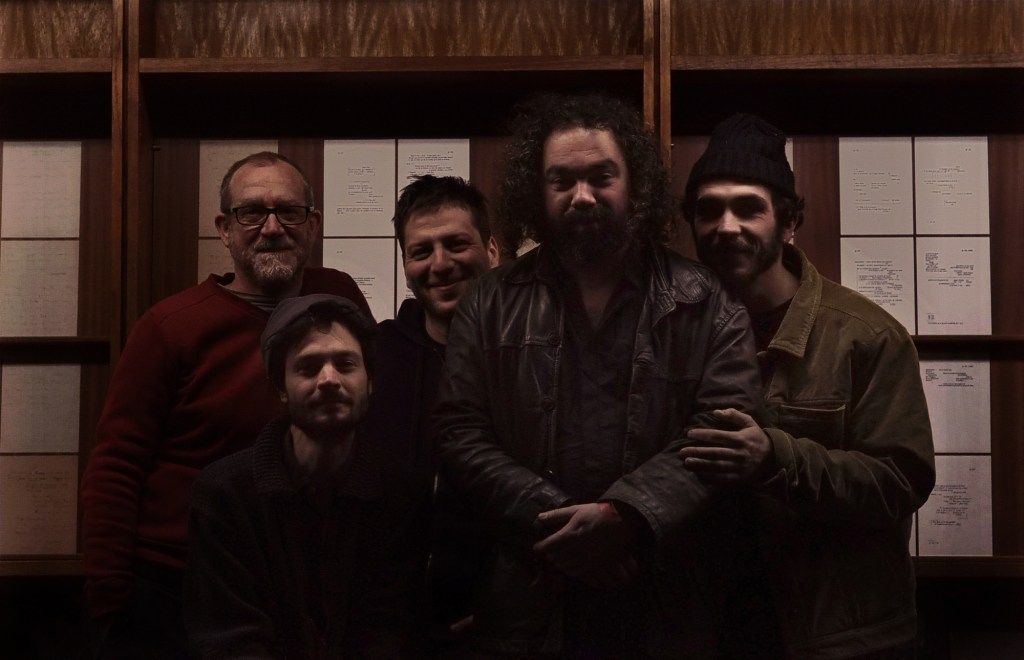
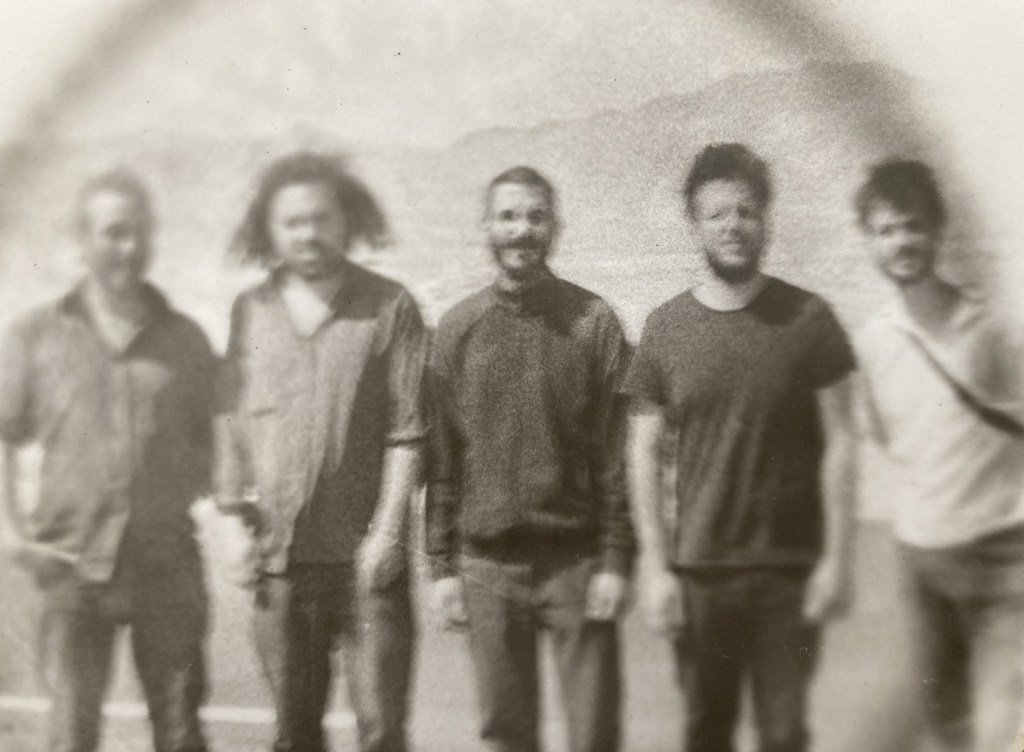
Loup Uberto: voices, lutes, banjo, bagpipes, feedback, sound objects
Lucas Ravinale: Begena, violin, tamburelli, sound objects, circuit bending
Alexis Vinéïs: Drums, sati, qraqeb, gardon
Jean-Philippe Curtelin: Drums, surdo, sati, qraqeb
Loïc Verdillon : 16mm films, projection
Etienne Foyer: Sound, spatialization
Production: Murailles Music, Via Parigi, Le Saule, Tsss Tapes
Various materials mixed and confused, in chronological order:
– at La Fonderie (Le Mans, Sarthe), August 2021
On cassette tape – Improvisations for isolated instruments and voices
Working material published in three volumes: ‘Préambules bègues’ available in K7 thanks to the label Fruqtrukgruq
– in Poncillon (Moselle), August 2022
Digital recording – 5 hours of instrumental improvisations
Selected and edited as extracts, supplemented with voices and various sound objects – Reduction on 16 tracks
– in Bourg-des-Comptes (Brittany), October 2022
Interpretation and spatialization of these 16 tracks in an acousmatic manner, by Etienne Foyer
Crossed mixing by Loup Uberto and Etienne Foyer, September to December 2022
Mastering by Etienne Foyer, September 2023
Photographs – Artisanal prints on baryta paper by Loup Uberto:
– Front cover – Eid clown in the Kurdish camp of Kalochori, Greece
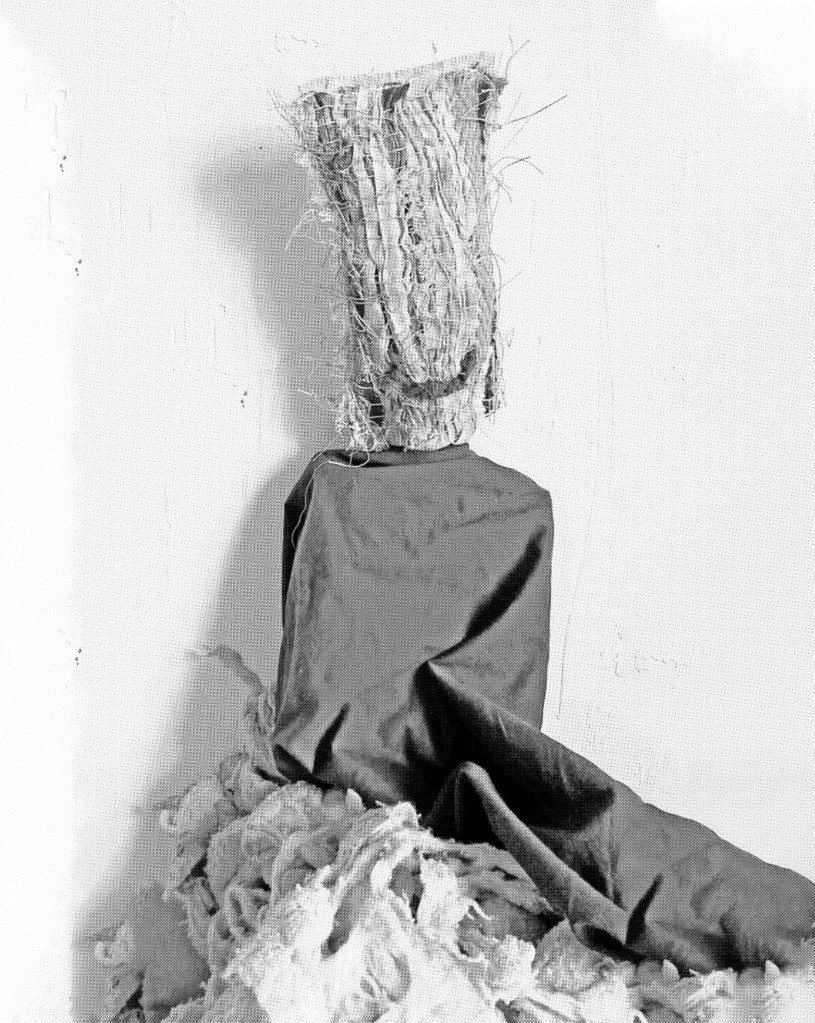
– Back cover – Sculptures by Lucas Ravinale, Chalon-sur-Saone
– Insert – Marionette by Lucas Ravinale, Chalon-sur-Saone
/Shot in Redeyef – Tunisia, during a residency at l’Economat thanks to Siwa platform.
Stunt : Selim Mansouri / Cam : Loïc Verdillon / Puppet by Lucas Ravinale / Edit : Loup Uberto
/Shot in the Po river lowlands « La Bassissima », Emilia-Romagna / Italia
Mask and danse by Soledad Zarka / Directed and edited by Loup Uberto
—
French Chanson, Noise, echoes of music from faraway and long ago, modified radio transistors and other old electronic gear… After releasing several sets of raw, almost entirely improvised direct-to-tape recordings duplicated by hand in a workshop on the border of the Bauges mountain chain, the Bégayer Trio made new friends. Orphans without a home, they were welcomed like brothers by the Parisian label Le Saule, spotted by the chic Geneva-based Bongo Joe Records, and thus were able to devote a year to the making of their debut album, “Terrain à mire. Une maison rétive. Contrainte par le toit.”
Co-produced by the two families mentioned above, the album was a first beam in the musical structure laid by this trio of Alpine fellows: what they sought was the most exact form of mutt-itude, a nomadic journey through intentionally scrambled ancient musical signs by way of French, Italian and Arabic song, gleefully following René Char’s aphorism, later borrowed and translated by Hannah Arendt as “Our inheritance was left to us by no testament.”
Bégayer’s mission– in the name of those without tradition, the rejects of a culture of scarcity born in the twilight of popular customs amidst the screams of Noise on village squares and in the flow of digital swarms– is to create a hitherto unknown genre of hybrid gypsy rhapsody.
The culture of scarcity can be experiences as a kind of cruel joy, an occasion to bridge the unsteady interpretation of ancient practices with contemporary experiments and build upon singular variations and excess. Up to now, every stutter-song intended to produce a joyful though disquieting object whose obstinacy and cruel simplicity triggered a disturbance, a distancing, a studied thing that stares right back at us.
Now the trio has become a quintet working towards a new kind of concert : with no beginning and no end, in which concert-time and quotidian time merge in order to deliberately drain of any autonomy the temporality of performance. Through the vocals, the homemade percussion and numerous strange instruments, two immutable musical activities will be celebrated and brought to bear on each other: the song of the people, whose cry of hunger and togetherness breaks through the barrier between art and life – and the art of performance explored as communal effort to describe our times.
In Greece & Poland – Winter 2025
At Les Instants Chavirés / Montreuil (FR)
—
L’ »évohé » est le chant des bacchants au carnaval. Celui, sanguinaire et drôle, qui humilie toute chose. Chez Euripide, on hurle des évohé lorsque la ville de Thèbes est mise en pièce par la fièvre et la mascarade. Tout le monde rit et chante, les ménades brûlent la cité, les masques percent et défigurent les habitants, Agavé mange la tête du roi Penthée, son fils.
On ne peut pas s’expliquer ce que c’est que ce chant, il faudrait décrire l’envers du chanté, son extrémité. Peut-être ne peut-on même pas l’entendre… sans doute le chant nous a-t-il déjà affecté avant de franchir le seuil de notre lucidité. Il sourdre… Il glisse sur la mémoire, on ne peut pas en connaître la mélodie, il n’y a pas de paroles, pas de notation, pas de tradition, pas d’apprentissage… aucune université de l’abîme chantée ne peut être fondée. L’orgie de matière est souveraine et incommunicable, le chant dont elle accouche est toujours étranger, idiot et perdu ; c’est une panique chantée. -Panique de Pan, qui offre une meute de chiens aveugles à Artémis et lui suggère, en passant, de les envoyer chasser dans sa débauche. Les chiens de la nature toute nue courent comme des fous à une vitesse impossible, ils engloutissent chaque bête dont ils flairent l’odeur dans le vent, ils dévorent toute la chair à leur portée. On peut s’imaginer que la meute reparaît invariablement dans les affaires humaines trop affirmatives, en face des certitudes, contre lesquelles sa sauvagerie s’impose plus violemment que contre toute autre chose. Par exemple : il nous arrive d’être un peu contents de nous, d’effleurer l’impression d’avoir composé, d’avoir plaqué notre ordre sur l’ordre de la matière… aussitôt il nous semble les entendre aboyer au loin. On se fige, on écoute, on préfèrerait croire à des hallucinations. Mais non. C’est bien l’ordre de la matière qui revient encore s’exprimer avec les chiens. L’ordre se déverse sur nous, le carnaval s’impose, et tandis que les chiens nous mangent la tête, ils nous offrent d’admettre que le socle de notre ordre était tout mou, tout bête et tout spongieux, tout décomposé, que l’ordre décomposé du dessous, la sincérité de la matière, n’avait pas cessée d’être orgiaque. Quand les chiens nous mangent, c’est que Pan a fait revenir la boue. Il a remis sur nous une grande louche de bouillon de matière, il a refait copuler toutes choses. On imagine un chant qui n’est pas du tout solennel, mais qui relève cependant d’une espèce de mystique froide et sans sacré, c’est l’emprise du souverain bouffon. Un chant apparemment désordonné et bravement bègue, qui se voit culbuté et s’en amuse…
 loupuberto.fr